Founder-led marketing for seed-stage startups means the founder becomes the main voice of the company. They publish original opinions and stories where buyers already spend time, usually LinkedIn. It works when the content is specific to the founder, consistent, and judged by qualified conversations rather than views. There is no universal formula.
I'm Priyanka Kasture, and I run founder-led marketing for early-stage AI, Web3 and SaaS startups. Content I produced reached over 500,000 views in three months. This guide covers the tactics and the judgment calls around them.
What is founder-led marketing for seed-stage startups?
Founder-led marketing is a go-to-market approach where the founder publicly represents the product. They publish their own perspective to attract customers, investors and hires. This post is written for seed-stage tech founders, including funded founders who are still pre-revenue.
Founder-led marketing: using the founder's voice, opinions and experience as the primary channel for building trust and demand for a product.
At the seed stage, the company usually has no brand and a small budget. A founder with a clear point of view is often the most credible asset it has.
Why does founder-led marketing work at the seed stage?
Because most of your buyers are not buying yet, and they trust people before they trust unknown companies. The 2024 Edelman-LinkedIn B2B Thought Leadership Impact Report notes that at any given time about 95% of business clients are not actively seeking goods or services. The same report found that 73% of decision-makers say thought leadership is a more trustworthy basis for judging a company's capabilities than its marketing materials, and 60% say they would pay a premium to work with an organization or individual that produces it.

For a startup with no brand, the 2025 edition adds the most useful finding. 53% of both hidden and target buyers agree that when thought leadership is high quality, it matters much less how well known the vendor is.
Two caveats. Both studies surveyed LinkedIn members on LinkedIn, and both define thought leadership as content that is not primarily about the product. Neither is specific to seed-stage startups, so read them as evidence of buyer behavior, not a forecast of your results.
Who is actually reading a founder's posts?
More people than the buyer you have in mind. The 2025 Edelman-LinkedIn report says more than 40% of B2B deals stall because of internal misalignment inside buying groups, often involving "hidden buyers" in functions such as finance, legal and operations.
Those hidden buyers are hard for sales to reach: 71% say they have little or no interaction with sales. Content still reaches them. 41% of hidden and 35% of target decision-makers say a C-level executive encouraged them to consider a vendor after engaging with that vendor's thought leadership. 65% of hidden buyers also prefer a more human, less formal tone over a polished intellectual one.
For a founder, that means one post is read by the buyer, the finance lead who will question your price, the operator who will use the product, an investor checking your traction, and a candidate deciding whether to join. The practical rule: write for the person who will never reply.
Is thought leadership enough for a seed-stage founder?
No. Thought leadership builds trust, but on its own it does not create distribution, a buying reason or a way to start a conversation.
Many founders hear that one strong opinion post will carry the company. I disagree. Thought leadership is one input, and the mix of formats, topics, and follow-up has to be built around the individual founder.
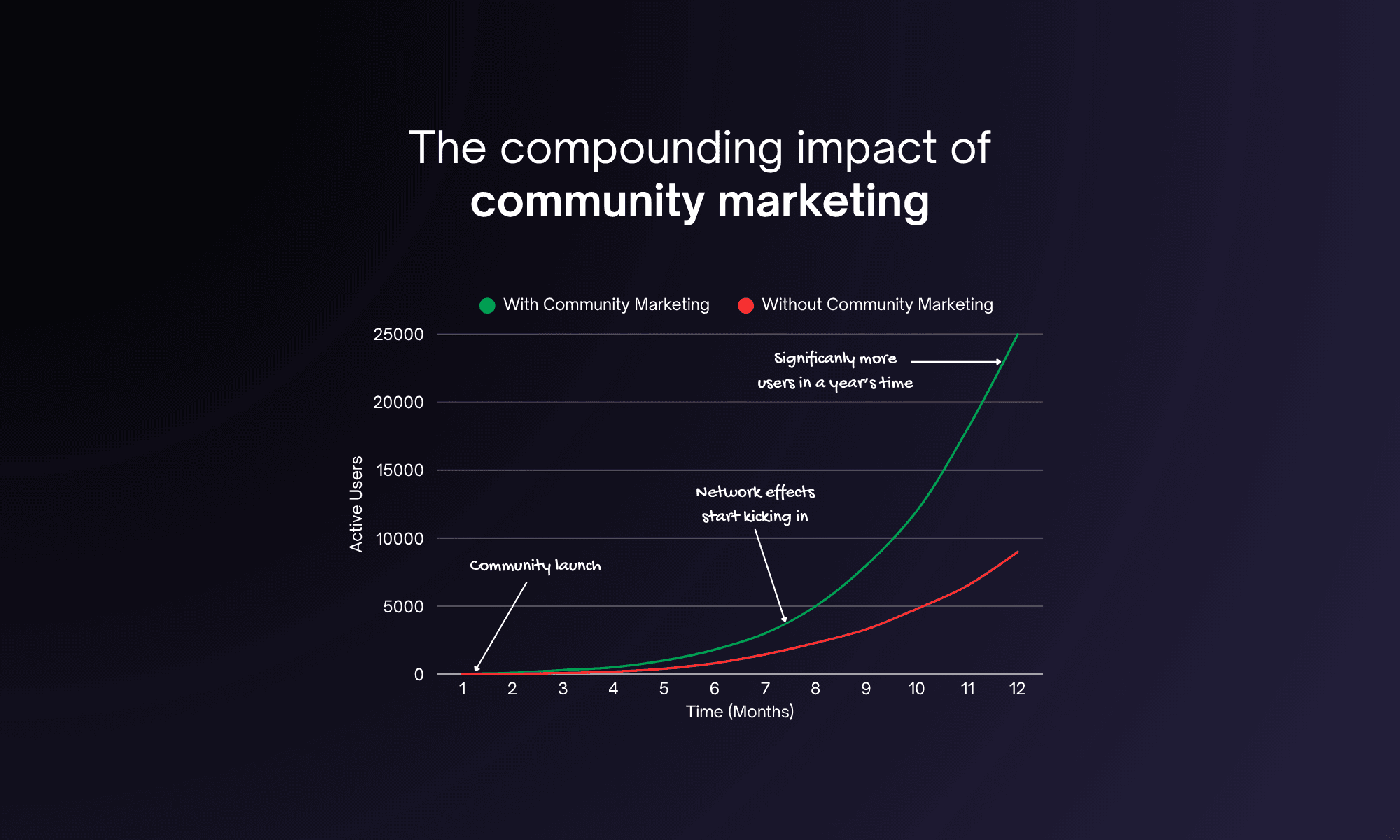
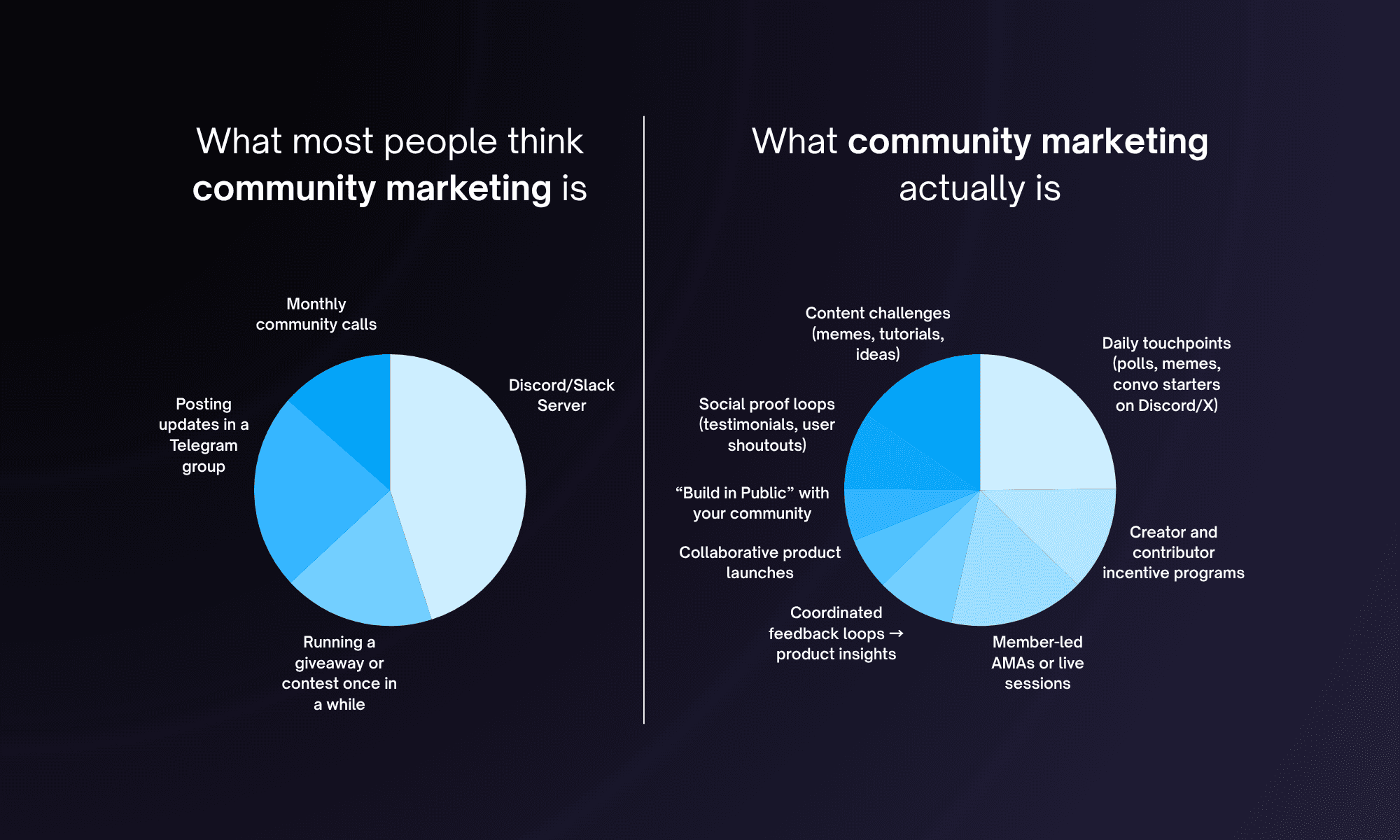
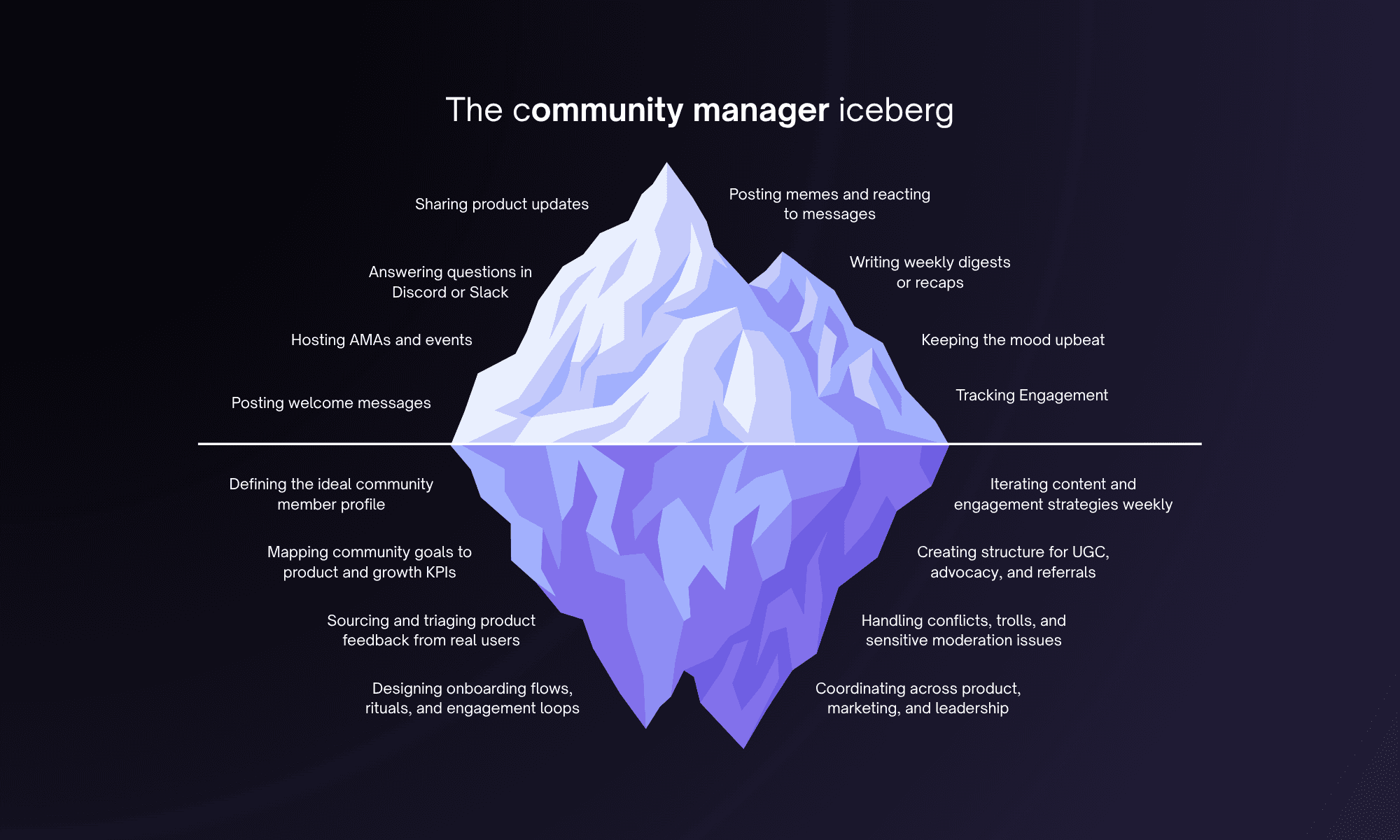
Founder content also works better alongside a community. I cover that in my posts on community-led growth as a channel most startups still ignore and on what community marketing actually takes.
How often should a founder post on LinkedIn?
Twice a week is enough if each post is strong. I do not ask founders to post daily.
Daily posting pushes a founder to lower the bar, and a lower bar is hard to reverse. Two strong posts a week are easier to sustain for months. Published guidance is mixed. Dataslayer argues that one valuable weekly post beats five forgettable ones, while Frontal recommends three to five posts a week. Neither is a controlled test of your account, so I treat cadence as something to test per founder, starting at two posts a week.
Do text-only posts work for founder-led marketing?
Not reliably on their own, in my view. Text alone is not what carries a founder's reach on LinkedIn, so I test video and document formats alongside it.
The public data is contested. Dataslayer reports document posts averaging 6.60% engagement against about 2% for text-only posts. A format guide from Conbersa ranks text-only posts second for reach, behind document carousels.
The bigger caveat is what nobody outside LinkedIn knows. Analysis from Suma AI finds that how much each signal weighs has not been published, and analyses converge on a readable profile, two to four recurring topics, and content that triggers conversations or saves. Treat any claim that "the algorithm does X" as a hypothesis to test.
What should a seed-stage founder never post?
Anything that could move a decision you have not made public yet: unreleased numbers, fundraising details, customer names without permission, and legal or regulatory claims.
Large public companies handle this with a review layer: communications, legal and investor relations. The SEC's Netflix case shows why. In 2012, CEO Reed Hastings posted a viewing milestone on his personal Facebook page. The SEC later said that disclosing material nonpublic information on an individual officer's personal social media, without advance notice to investors, is unlikely to be an acceptable method of disclosure.
The SEC's report noted that Hastings did not consult other officers, legal or investor relations before posting. It brought no enforcement action, citing market uncertainty about how the rule applied to social media. See the SEC press release.
A seed-stage founder has no review layer, and the closest equivalent risk is fundraising. In a private raise under Rule 506(b), law firms list announcements on LinkedIn, X or a company website revealing that you are fundraising as examples of general solicitation. Procopio warns this can cost an issuer its exemption, while general business information such as products and milestones is permissible. See the Perkins Coie guide and the Procopio note.
I am not a lawyer, so check any post touching a raise with your securities counsel first. Web3 founders should treat token announcements the same way.
That is why a founder-led program needs a pre-publish check even without a legal team. Before anything goes live, ask:
Does it reveal a number or customer that is not public yet?
Does it mention our fundraising?
Does it make a claim I cannot back up?
Does it criticize a named person or company?
Would I be comfortable with an investor, a customer and a competitor all reading it?
How do you start founder-led marketing as a seed-stage founder?
Start with a short process, not a formula. These eight steps are a starting point that you adjust per founder.
Name the buyer. Write down the one type of buyer you want to reach and the problem they talk about.
Make the profile readable. Your headline and About section should say who you help and what you build.
Pick two to four recurring topics. Stay inside them long enough for readers to associate you with them.
Choose formats by testing. Start with the format you can produce well, add one more, and compare results over several weeks.
Set a pre-publish check. Use the five questions above on every post.
Post twice a week. Hold the quality bar before you raise the volume.
Measure conversations, not views. Track replies and DMs from target buyers, and calls booked. The 2024 Edelman-LinkedIn report found only 29% of thought leadership producers can link sales leads back to specific pieces of content.
Give every post a next step. That can be a reply, a DM or a call.
What is the Fit Before Formula method?
Fit Before Formula is how I approach founder-led marketing at priyankakasture.com. Priyanka Kasture's rule is to copy no tactic until it fits the founder in front of me. I run four checks first:
Format fit: Which format can this founder produce well and repeatedly: video, document carousel or text?
Cadence fit: What rhythm can this founder hold without quality dropping? My starting point is two posts a week.
Message fit: What does this founder know or believe that their buyer cannot get elsewhere?
Risk fit: What can this founder say publicly given their fundraising stage, customers and legal exposure?
Only when all four fit do I build a content plan.
When should a seed-stage founder hire help with founder-led marketing?
Hire help when you have funding, a clear buyer and a real point of view, but not the hours to turn that into consistent content. Good help also needs three things from you: access to your time, a defined buyer, and a sign-off process. Founder-led marketing cannot fix an unclear offer, so if you cannot yet say who the product is for, fix that first.
Results vary by founder, product and market, and I do not promise call volumes.
I founded Age of Geeks, an AI community of 500,000+ members, and you can read how it grew in the Age of Geeks community growth case study. You can see how I work on Web3 launches in the Redbelly Network case study on community and ecosystem growth.
If you are a seed-stage founder and want to see whether the fit is there, book a discovery call.
Founder-Led Marketing FAQ
Can I outsource founder-led marketing?
You can outsource drafting, editing, design and scheduling, but not the perspective. The opinions, stories and decisions have to come from the founder, or the content reads as generic and buyers notice. A good working setup is a short weekly conversation where the founder shares what they saw and believe, and a marketer turns it into posts.
How is founder-led marketing different from personal branding?
Personal branding builds the individual's reputation. Founder-led marketing uses the founder's voice to build demand for a specific product, so every post connects back to a buyer problem the company solves. The founder benefits from visibility, but the goal is pipeline, hiring and investor interest, not follower count.
How long does founder-led marketing take to produce leads?
It depends on the founder, the market and the starting audience, so nobody can honestly promise a timeline. Early weeks go into finding the formats and topics that fit. I judge progress at six months by qualified conversations and booked calls, not by view counts, because views alone do not pay for a startup.
What if the founder does not want to be on camera?
Then do not build the plan around video. Written posts and document carousels can carry a founder's ideas, and the Fit Before Formula check for format exists to find what the founder can do well repeatedly. Video can be added later, once the founder is comfortable and has something worth showing.
Written by Priyanka Kasture, growth marketer for early-stage AI, Web3 and SaaS startups.